
When Meditation Meets Metagenomics
9 October 2026
Topics
Mental Health
Microbiome
By applying new scientific methods to ancient mindfulness practices, Professor Jo Handelsman is mapping the molecular mechanics of the gut-brain axis.
For centuries, contemplative practices like meditation have operated within the domain of the experiential, valued for their subjective psychological benefits but largely divorced from the hard parameters of molecular biology. Empirical Western medicine has historically treated mindfulness with a certain amount scepticism, categorising it as a soft behavioural intervention rather than a precise therapeutic mechanism.
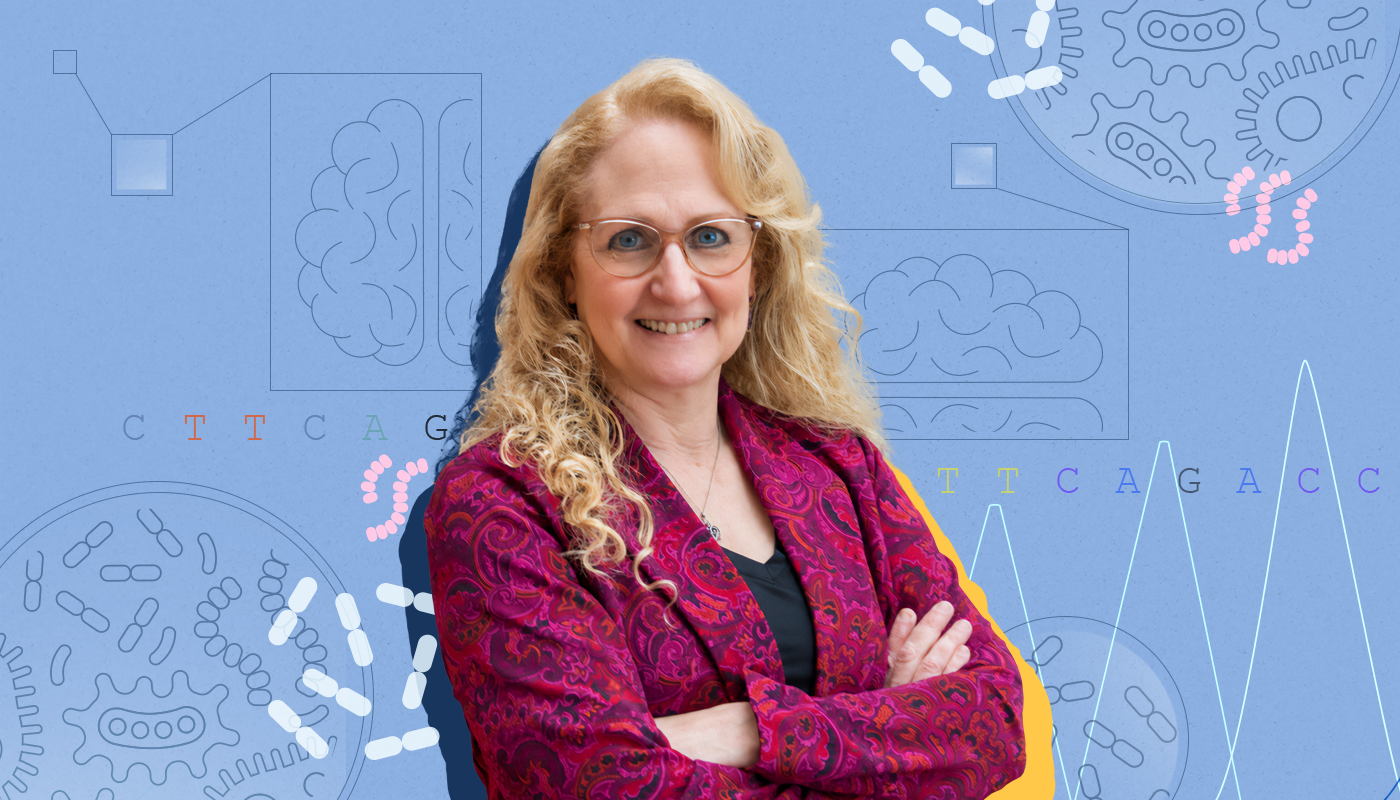
However, a shift is occurring at the intersection of mental health and metagenomics. A deeper understanding of the gut-brain axis is beginning to bridge this gap, revealing that psychological practices like meditation can introduce measurable, structural shifts within the human gut microbiome. Leading this paradigm change is Professor Jo Handelsman, Director of the Wisconsin Institute for Discovery, in collaboration with colleagues at the Center for Healthy Minds who are utilising high-throughput metagenomics to unravel the deep biological mechanisms of mental wellness and establish the scientific bases for interventions including meditation.
From the Oval Office to the Gut
Handelsman’s trajectory toward investigating the gut-brain axis began not in a clinical psychiatry ward, but within the highest levels of federal science policy. Between 2013 and 2017, she served as a science advisor in the White House Office of Science and Technology Policy under the Obama administration. She helped design the Precision Medicine Initiative, which is an effort to move the American healthcare landscape away from a one-size-fits-all model toward deeply tailored, data-driven therapeutic paradigms. It was during this tenure that she encountered an alarming statistic: antidepressants provide a benefit over placebo in only about 20% of patients.
And yet selective serotonin reuptake inhibitors (SSRIs) are among the most heavily prescribed drugs globally, Handelsman says. “Patients often have to go through a trial-and-error process of finding the right SSRI for them, which can take months, if not years,” she adds. “Not only does this cost the health system a lot of money, but it means that people suffer throughout that entire time of experimentation.” Witnessing this clinical bottleneck convinced Handelsman that modern psychiatry was constrained by an incomplete map of human physiology and was a strong candidate for precision medicine approaches.
As a microbiologist who spent decades analysing the complex communal behaviours of bacteria in soil and on plant roots, Handelsman viewed the problem through an ecological lens. A fundamental physiological clue stood out: although serotonin is widely associated with the brain, approximately 95% of the body’s serotonin is produced in the gastrointestinal tract. While serotonin itself cannot cross the blood-brain barrier, gut-derived serotonin influences intestinal physiology and communicates with the brain through neural, immune and metabolic pathways that are increasingly recognised as key components of the gut-brain axis. Upon returning to the University of Wisconsin-Madison, Handelsman and her collaborator Dr. Margaret Thairu, an expert is insect-microbe interactions, leveraged their backgrounds in complex environmental ecosystems to launch the Lucida project, an ambitious initiative designed to explore how the community of bacteria in the gut might have an impact on human mental health.
Applying Metagenomics to Meditation
The core methodological engine of this research is metagenomics—the science of analysing genetic material recovered directly from a clinical or environmental sample. Traditional clinical microbiology relied on isolating and culturing single bacterial strains on agar plates, a technique that misses the vast majority of microbes that do not grow in standard lab conditions. Metagenomics bypasses this limitation entirely by treating the microbial community as a holistic, integrated functional unit. By sequencing the collective DNA of an entire ecosystem, researchers can transition from asking merely "who is present?" to mapping what they are capable of doing.
Using metagenomics, Handelsman and Thairu found that microbiomes in individuals undergoing a structured meditation programme were enriched for genes involved in the biosynthesis pathway of butyrate, a short-chain fatty acid produced by beneficial gut bacteria. Butyrate serves as the primary energy source for the epithelial cells lining the colon, plays a crucial role in maintaining tight cell junctions, and preserves the structural integrity of the intestinal wall. “This finding was very interesting to us because butyrate has a dramatic effect on the health of the gut lining,” explains Handelsman.
“There’s some evidence that if people don’t have enough butyrate from their bacteria, their gut lining can become ‘leaky’ and neurotoxins can get through the lining and possibly send signals to the brain,” she continues. One possible mechanism is inflammation, where microbial products and inflammatory mediators may influence brain function and contribute to depressive symptoms. By enriching butyrate-producing microbial pathways, the hypothesis goes, meditation may help support gut barrier integrity and reduce inflammatory signals that could influence brain function.
The Wisconsin-Singapore Collaboration
The idea that a non-invasive, low-cost intervention like meditation could be as effective or even more effective than current standard of care is a revolutionary one, in Handelsman’s opinion. “That’s why I’m excited about the meditation result; it is a relatively safe recommendation, it’s been done for thousands of years. And then even more interestingly, the efficacy of meditation can be as high as 50%, much higher than with SSRIs, and with far fewer side effects,” she says.
Validating such findings on a global scale is the next logical step—and challenge. Will the impact of meditation on the microbiome found in the US population hold in Asia, where diet, lifestyle and demographics can be profoundly different? That is the question the Wisconsin Singapore (WisSing) collaboration seeks to answer, robustly and rigorously. “One of the advantages of this partnership is that we’re both very diverse but very different countries. If we find that principles hold across both populations, or even some subset, I will be convinced that we’ve found something generalisable,” Handelsman says. “That is one of the big aims of this project—finding things that are true of all people or at least finding things that are true of some people but being able to predict who it will be true of.”
The WisSing collaboration juxtaposes data from the 1,500 participants of the Lucida project with comparable data from the 6,000 participants of the Gut Linked Outcomes in Wellbeing (GLOW) study led by Professor John Chambers in Singapore. While research papers and highly impactful findings are expected, one immediate success has been the implementation of Singapore’s secure Trusted Research Environment (TRE), which provides a trusted platform for secure data management and collaborative research. TRE highlights Singapore’s capability to support international biomedical research through secure infrastructure and robust data governance.
Over the long term, the collaboration aims to deploy multi-modal artificial intelligence capable of parsing disparate data layers—ranging from deep microbiome profiles and blood biomarkers to lifestyle factors—to detect subtle disease predictors that were not possible before, while simultaneously training a new generation of inherently interdisciplinary, globally collaborative scientists. By translating meditation and other mental health interventions into measurable biological data, research is helping to transform a subjective experiences into a scalable, clinically reproducible tool for precision psychiatry.